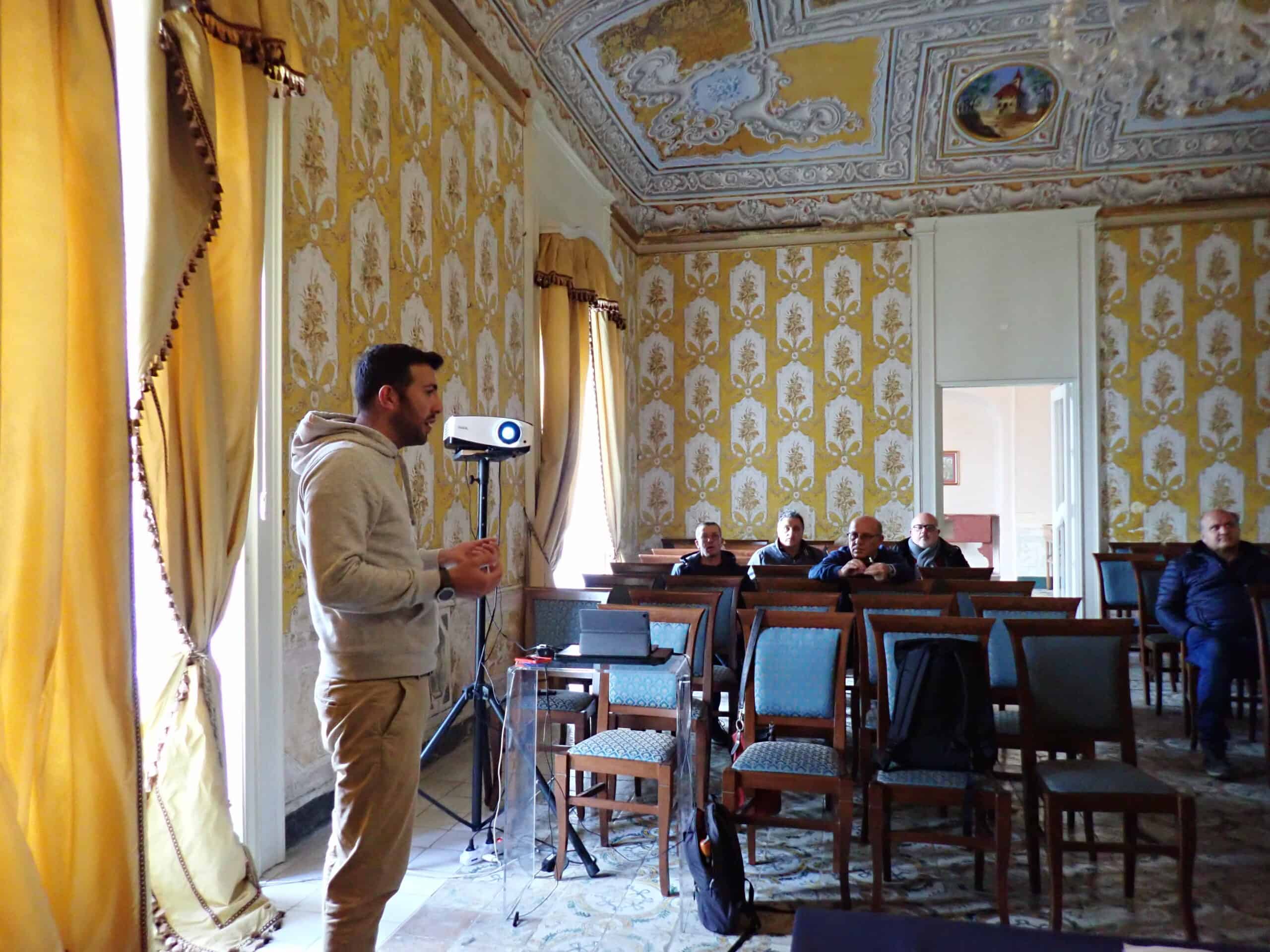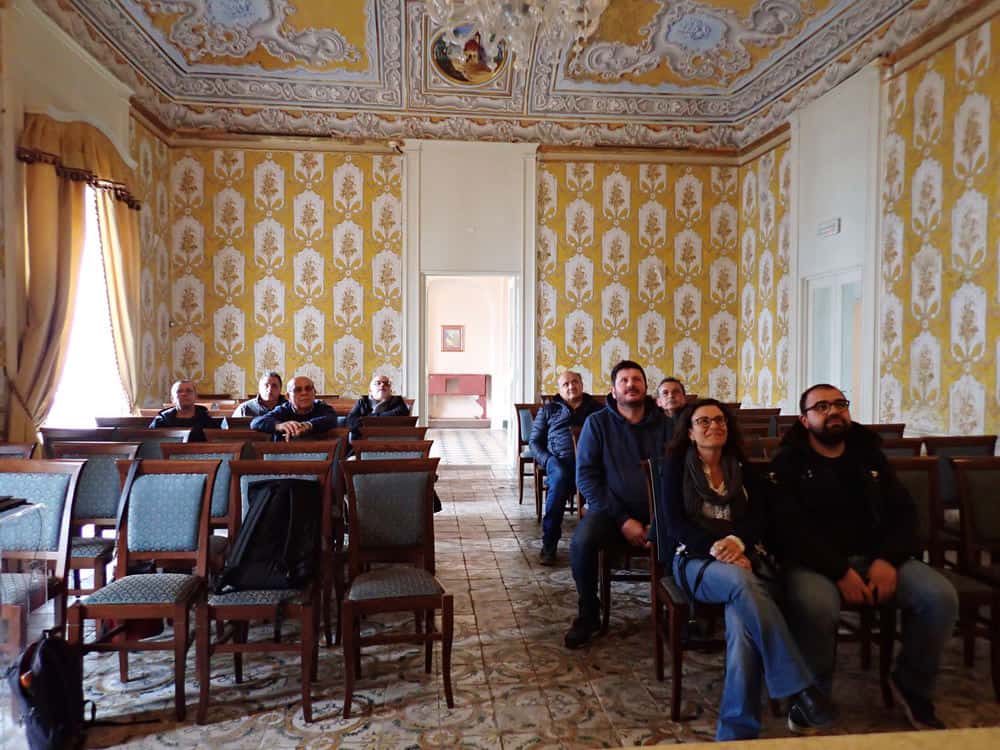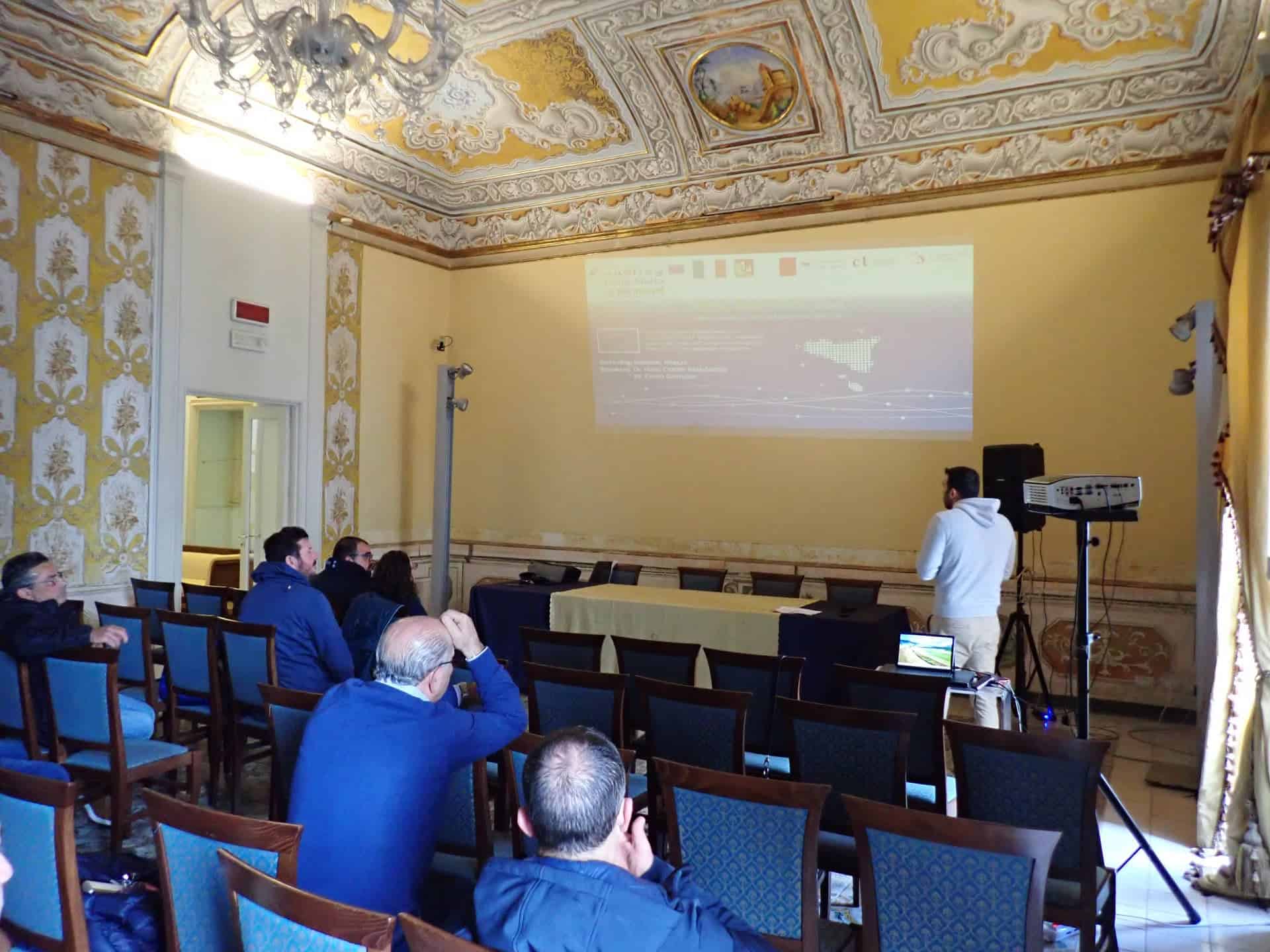
A meeting was held with the fishermen of the Marine Protected Area of Capo Milazzo, in order to provide information and data on the endangered species and the so-called alien species, which are those now living in the Mediterranean but originally coming from other seas. This meeting aimed at enhancing the training of the “Sentinels of the Sea”, the fishermen of the fishing fleets included in the MPA participating in the project. In this way, they will report to us the sightings of species at risk, alien species, and marine litter.
On 10 March, a meeting was held among the fishermen operating in the Marine Protected Area around Capo Milazzo.
The aim was to launch a training involving the communities of small-scale artisanal fishing operating in Milazzo, Riposto, Portorosa, to raise awareness on the issues related to marine biodiversity and the protection of vulnerable marine species.
The meeting started with the presentation of the SEA MARVEL project, illustrating its general and specific objectives, with a focus on the activities carried out by the small-scale artisanal fishermen.
Then, the most common alien marine species in the Mediterranean Sea were presented, with the support of a digital and paper presentation explaining their features and the way such species enter our Mediterranean waters. The fishermen were aware of their presence in the area of Milazzo, Riposto and Portorosa, and affirmed that some of the specimens are usually caught during their activity. Nevertheless, most of the species remains unknown.
Among the species listed, we included the Atlantic blue crab (Callinectes sapidus) which, compared to other sites, is still not that popular in that area. In this regard, the fishermen reported only two relevant catches concerning this species. They also underlined that the number of Gobius is decreasing every year.
The following topic focused on vulnerable species. In several cases, the presence of dolphins during the fishing activity is reported, as well as of Caretta caretta sea turtles. Unfortunately, in this area too, such specimens are sighted when dead or at risk, especially when they eat it or are trapped in it. The fishermen are well aware of the importance of these species for the Mediterranean marine environment. In this regard, we also addressed the topic of the presence of pollutants and marine litter at sea.
After that, we discussed the shared approach implemented by the SEA MARVEL project towards the stakeholders, so that they can better contribute to the realization of the project’s objectives and to the protection of the sea as a crucial common good. This is why the “Sentinels of the Sea” were created: groups of selected fishermen belonging to different fleets participating in the project can contribute, thanks to the cameras provided by SEA MARVEL, to report with pictures and videos to the collection of data concerning sightings and catches of endangered and alien species, as well as of pollutants and plastics at sea.
It was also extremely interesting to discuss together the shared management of fishing plans. The only shared management plan so far is that of Cogepa in Portorosa and it is widely acknowledged at a national level. Moreover, for years, a permanent discussion has been set up between Cogepa, WWF, the Municipality of Milazzo, the MPA of Capo Milazzo, Marevivo, Anthon Dohr geologic station and the Port Authority.
This is perfectly in line with the project’s objectives involving the Natura 2000 sites, whose management could also benefit from a better cooperation among the stakeholders. Therefore, the collaboration between the ship owners and the fishermen is crucial, since the aim is to implement systemic local shared management plans to then sustainably use marine resources. In this particular framework, thanks to their previous experience, it is possible to learn from them. SEA MARVEL aims at supporting the transition towards shared management plans concerning fishing standards and governance, with a particular focus on small-scale artisanal fishing. To this end, Cogepa in Portorosa can be considered a good practice to be shared with others.