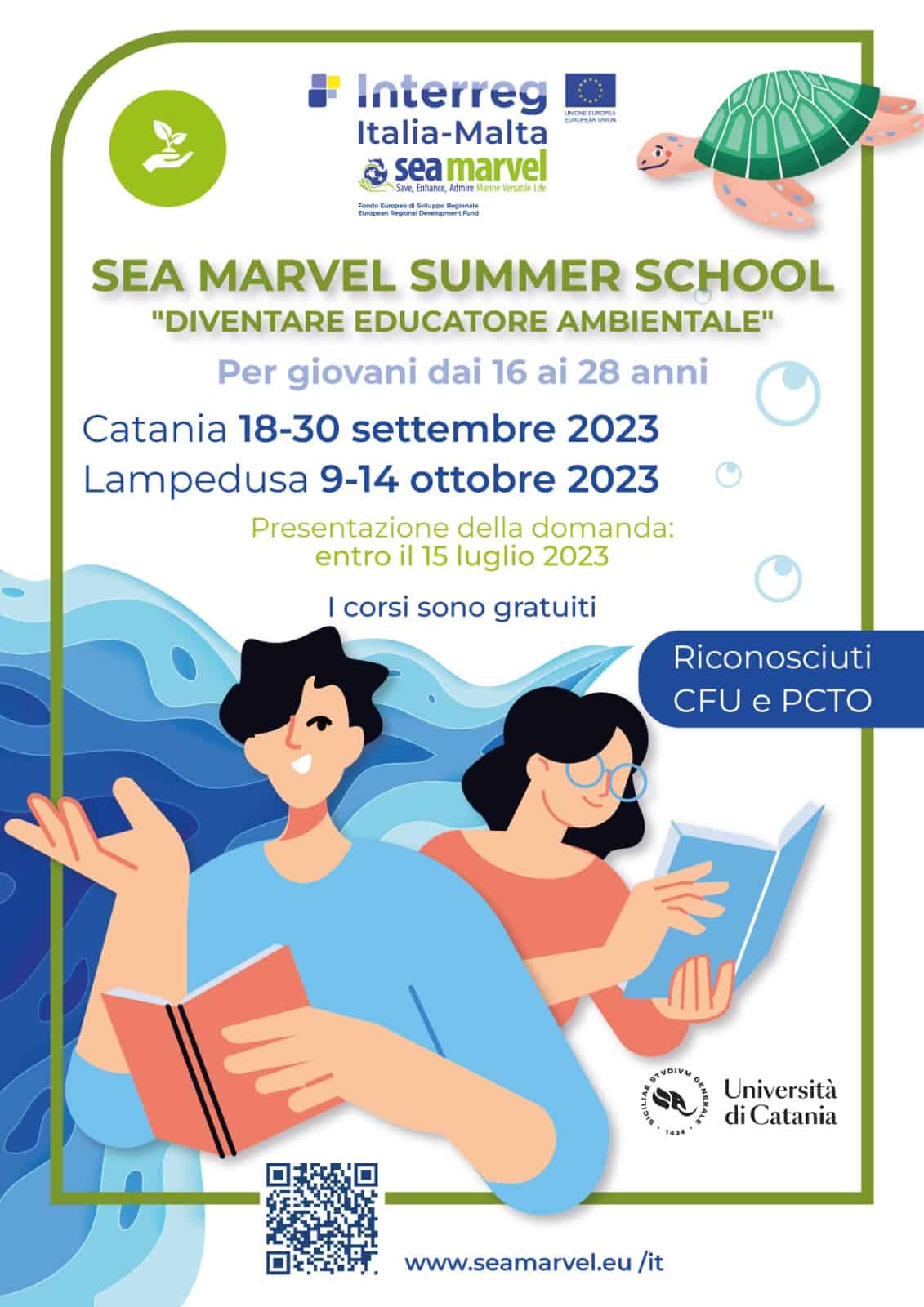
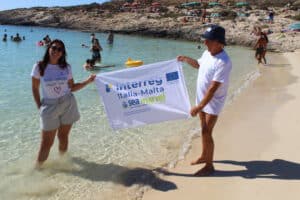
The University of Catania is now promoting a free training initiative next autumn, aimed at young people aged between 16 and 28 who wish to acquire skills in the field of environmental education, the protection of sites of high environmental value and the promotion of the territory.
This opportunity is provided in the framework of the SEA Marvel – Save, Enhance, Admire Marine Versatile Life project, financed by the European Regional Development Fund – INTERREG Italy – Malta – Priority Axis 3. In fact, the University of Catania is developing such priority in order to increase and disseminate awareness of the risks endangering the marine ecosystem, contribute to mitigating the effects of plastic pollution, the overexploitation of sea resources, the invasion of alien species and the effects of climate change in order to maintain and restore the marine ecosystem and the protected Natura 2000 sites.
Among its objectives, the project includes the training of young students in subjects relating to natural and marine sciences to increase a sense of belonging and care for the natural resources of the territory, considered as a common good, and also the subsequent involvement of students in awareness and dissemination activities.
The program includes 60 hours of training with lectures, workshops, practical activities and field trips with excursions to the Natura 2000 sites adhering to the project, sea trips to observe cetaceans and collect floating plastics.
There will be two locations for the training workshops: Catania and Lampedusa.
In Catania the training activities will begin on 18 September and will end on 30 September, while in Lampedusa such activities will take place from 9 to 14 October.
Participation is free of charge and registration is open until 15 July 2023.
The application for admission can be submitted online and the registration form can be downloaded from the site https://seamarvel.eu/it/.
A team of experts with a long experience in environmental education, natural sciences, marine biology and hiking will develop the training of around 140 boys and girls who, at the end of the activity, will have training credits recognized by the departments of the University of Catania. The initiative is also open to high school students, which will be able to create agreements for the inclusion of students in PCTO (School-Work Alternation) courses.
The association Marevivo, active in the sea protection for almost 40 years, is entrusted with the task of implementing the training plan, coordinated by the University of Catania which will supervise the development of the planned activities and the teaching tools that will be used.
“A wonderful chance offered to many young people who are attending courses related to natural and marine sciences – states Fabio Galluzzo regional delegate and national vice president of Marevivo Onlus – in this way, they will have the opportunity to acquire new skills and tools to plan their future towards a greener perspective. Protecting the planet is now an imperative that affects the productive and political world on a global scale. It has become increasingly important and urgent to push, especially among young people, towards changes that may influence production sectors and increase the demand for qualified roles who can support this long and difficult journey.
The course will give young participants the opportunity not only to acquire professional skills, but also new knowledge useful to address issues such as: climate change and pollution, ecological transition, sustainable fishing and integrated waste cycle. We strongly hope that, thanks to this initiative, trained young people will be able to see a personal and professional improvement, and also to increase their contribution to the dissemination of right behaviours towards a more equitable and sustainable world.”
“The Department of Agriculture, Food and Environment of the University of Catania promotes a collaborative approach based on the citizen science and involving the civil society. This model allows the transfer of knowledge to the community and therefore a greater awareness around environmental problems and the role that individuals can have in the protection of natural resources” – states professor Iuri Peri, scientific coordinator of the project.