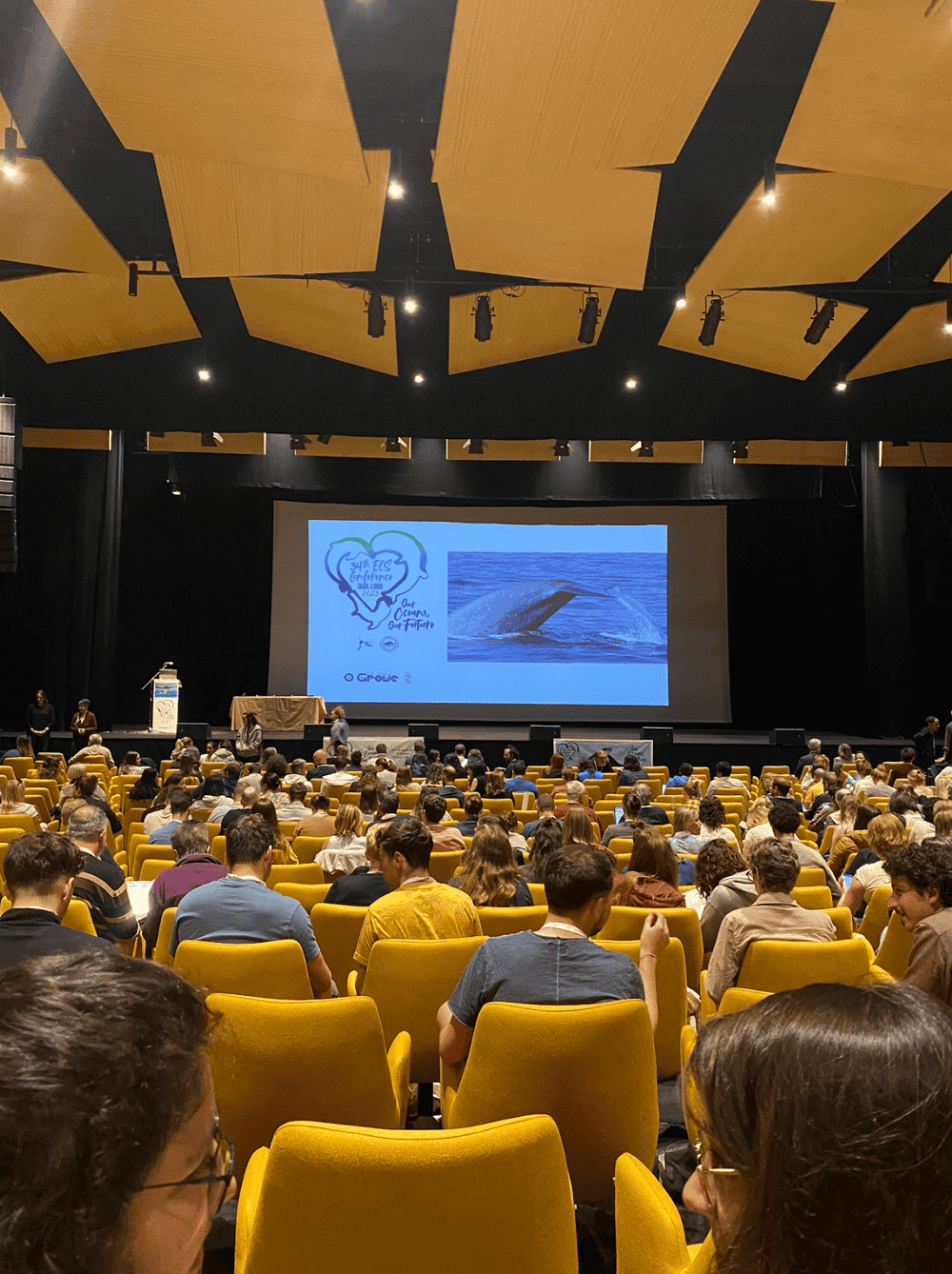
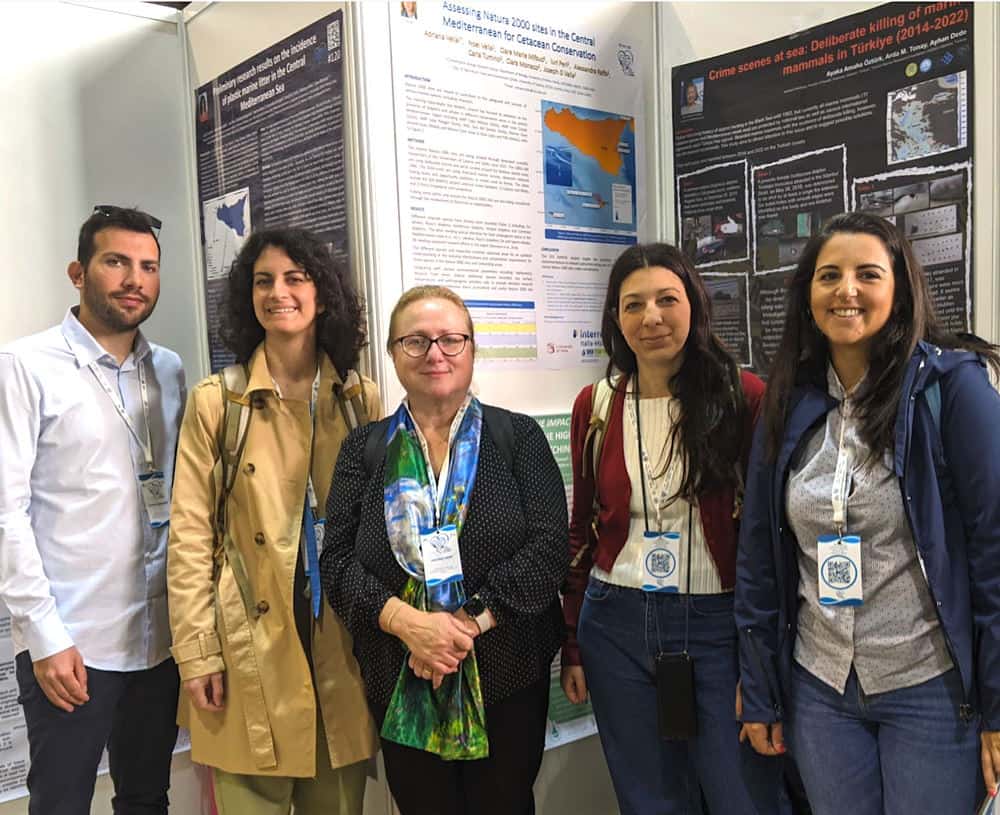
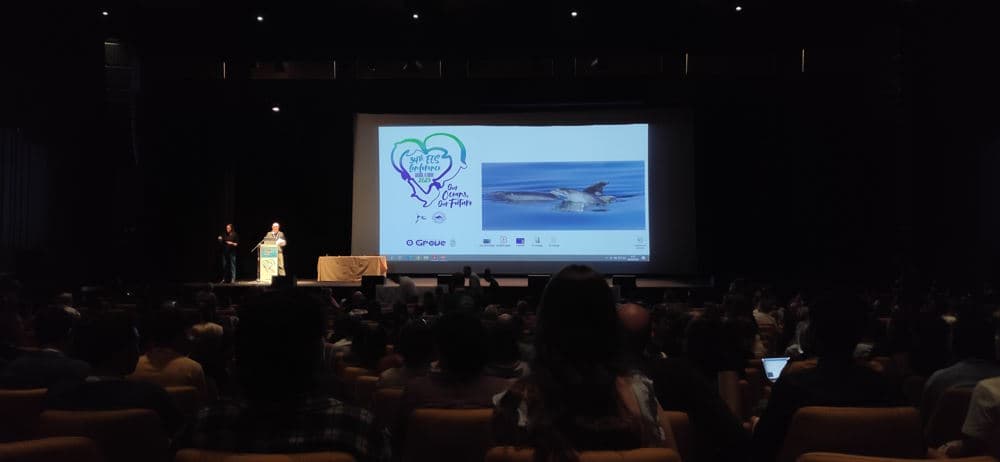
Last week, the Italian and Maltese research groups participating in the Sea Marvel project gathered in O Grove, Spain, at the 34th Annual Conference of the European Cetaceans Society.
The University of Malta partner was represented by Prof Adriana Vella and Dr Joseph Vella, while the University of Catania lead partner was represented by Dr Clara Monaco, Dr Alessandra Raffa, Dr Carla Tumino and Dr Enrico Giarrusso.
Various ongoing research aspects of the SEA MARVEL project were presented to showcase the targets of the project for marine conservation in the Central Mediterranean region, especially in Natura 2000 sites.
Building on the conference theme, “Our Oceans, our Future”, around 600 experts discussed issues such as the behaviour and ecology of marine mammals and the sustainable use of marine resources.
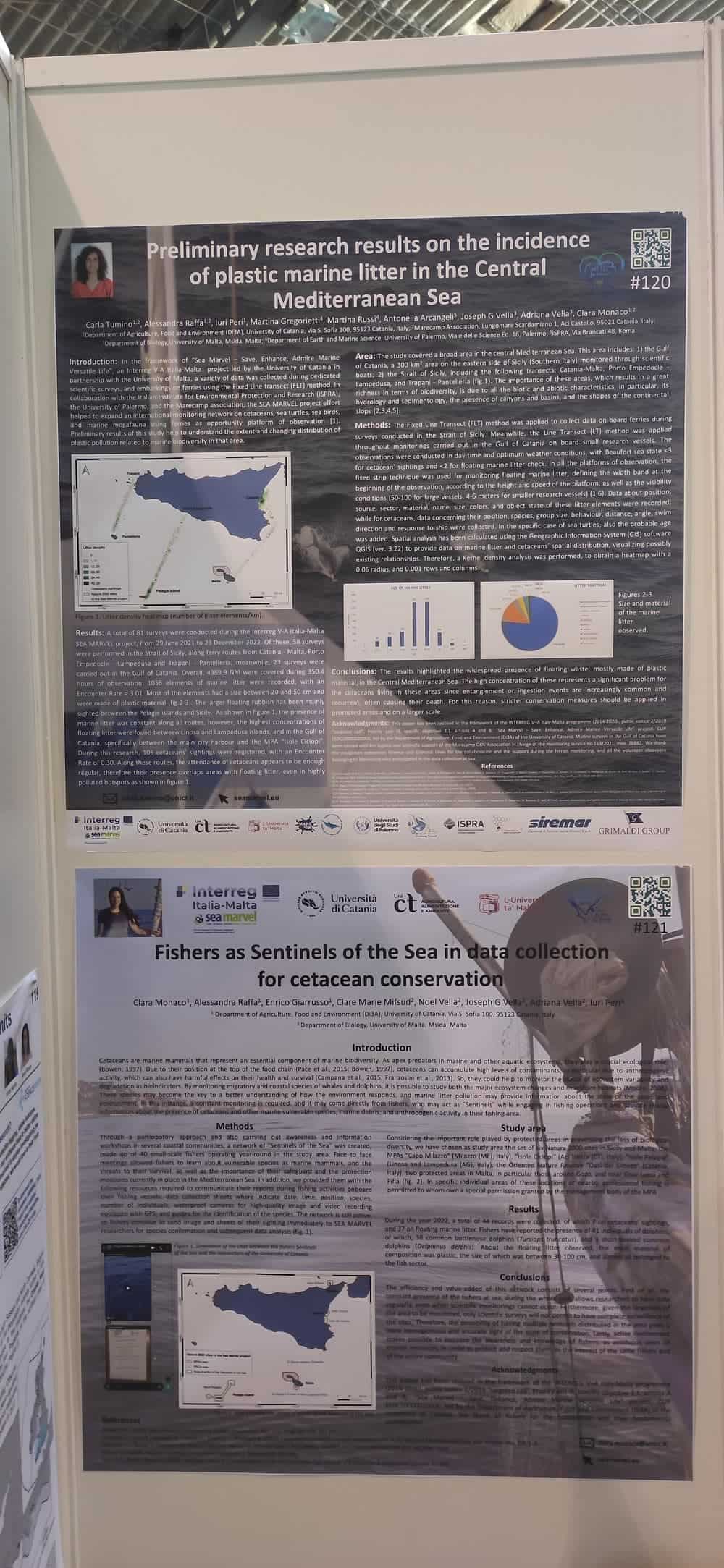
Sea Marvel contribution was extensive, as four projects related to research and dissemination activities were presented at the conference. Such activities have been implemented over the last year in the six Natura 2000 sites involved in the project.
The preliminary findings on the distribution of cetaceans in the cross-border area between Italy and Malta show the presence of specimens of fin whale, bottlenose dolphin, Risso’s dolphin, common and striped dolphin. The sightings were possible thanks to the survey activity – both at sea and by air – carried out around the Maltese islands, as well as through marine surveys carried out both on scientific vessels and on observation spots such as fishing boats, cargo ships, ferries in the Gulf of Catania and the Strait of Sicily.
After travelling over ten thousand nautical miles, the monitoring also highlighted the widespread presence of floating waste, mainly plastic, in the central Mediterranean Sea. Its high concentration poses a constant threat to cetaceans living or migrating in the area: they are increasingly and accidentally eating fragments of plastic, while at times they get trapped in them.
In this context, we increasingly need to apply strict protection measures in critical areas of the Mediterranean, especially the protected ones. In order to do this, it is necessary to have an in-depth knowledge of the environment through an extensive and constant data collection. Such activity is currently involving around fifty artisanal fishermen operating in Sicily and Malta as “Sentinels of the Sea”. They are able to constantly report to Sea Marvel researchers on the presence of marine species at sea. The integration of this information with the findings from scientific monitoring – the latter being more limited in terms of space and time compared to the fishing expeditions of the Sentinels – is leading to a clearer understanding of the conservation status of some indicator species and vulnerable apex predators, such as cetaceans.
Furthermore, the involvement of the marine community has triggered a process of acknowledgement and awareness around environmental issues, which require several tangible actions to protect biodiversity. The scientific support provided by the University of Catania and Malta is leading us in this direction.
In the documents’ section, you can download the posters presented at the Conference.