On 1st June, we celebrate the World Reef Day, established for the first time in 2018 by the International Coral Reef Initiative (ICRI) with the aim of raising awareness on the fundamental role coral reefs play in our planet and their current state of health.
Coral reefs are present only in 1% of the seabed on our planet, while at the same time they host 25% of the global marine biodiversity. Such biodiversity is made of corals, sessile colonial organisms belonging to the animal kingdom. In fact, they are composed of calcareous skeleton hosting small polyps covered by microscopic algae, called Zooxanthellae, able to perform photosynthesis. In their symbiotic relationship, these use the waste substances produced by the polyps and then they are able to give them back with oxygen and several nutrients.
As per the growth of their calcareous skeleton, they use CO2 dissolved in water, which together with calcium oxide (CaO) and water (H2O), forms calcium carbonate (CaCO3). A significant risk for corals is therefore posed by the increase in the acidification of waters. The acids, in fact, cause the dissociation of the molecule with the consequent erosion of the calcareous skeleton. In addition to that, other serious elements of stress are the warming of the oceans and pollution, both responsible for the notorious coral bleaching. The visible loss of colour is caused by the expulsion of Zooxanthellae, which might either leave the coral temporarily if the stress conditions decrease, or abandon it definitively if such conditions persist, leading to the death of the coral.
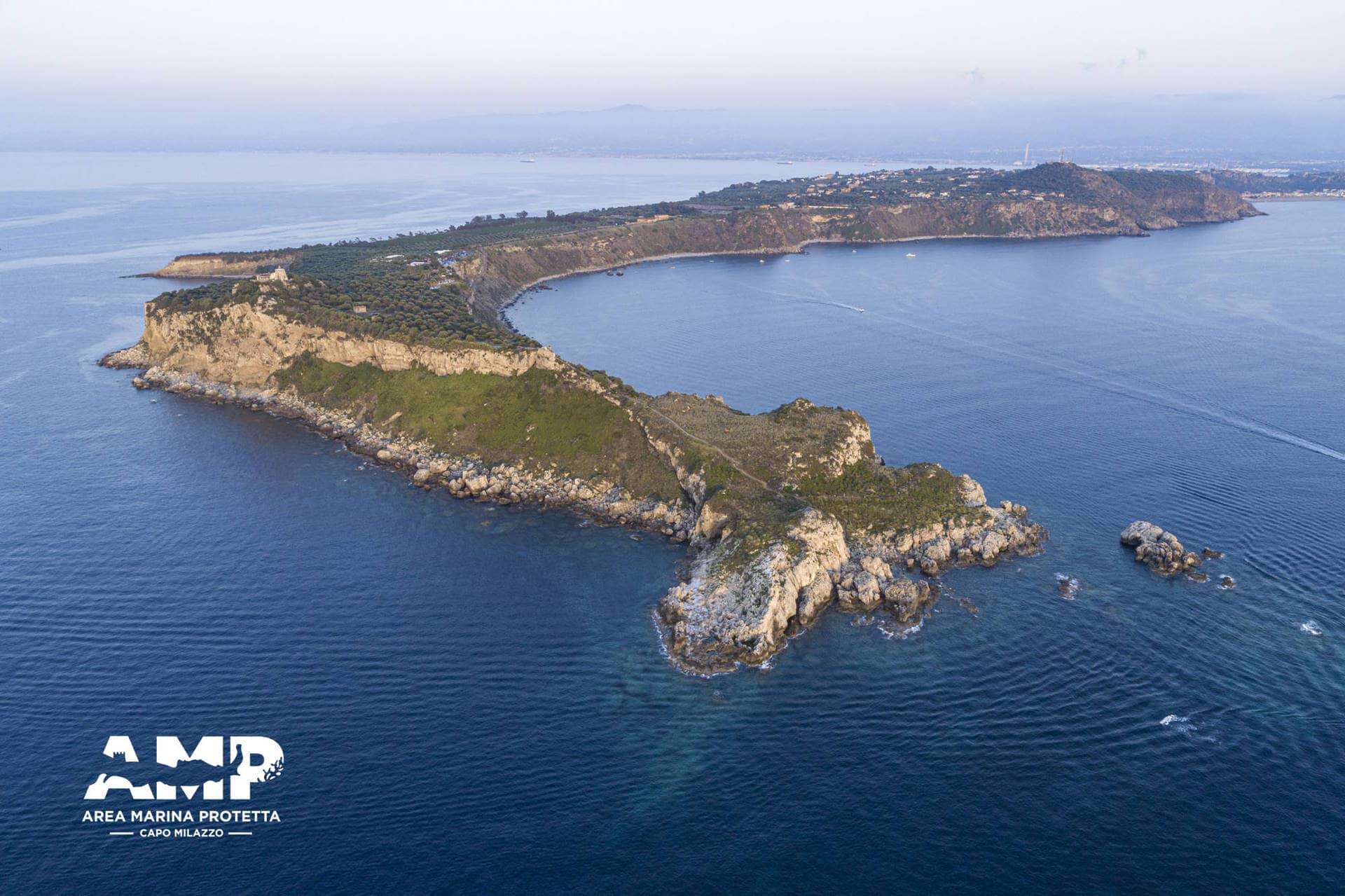
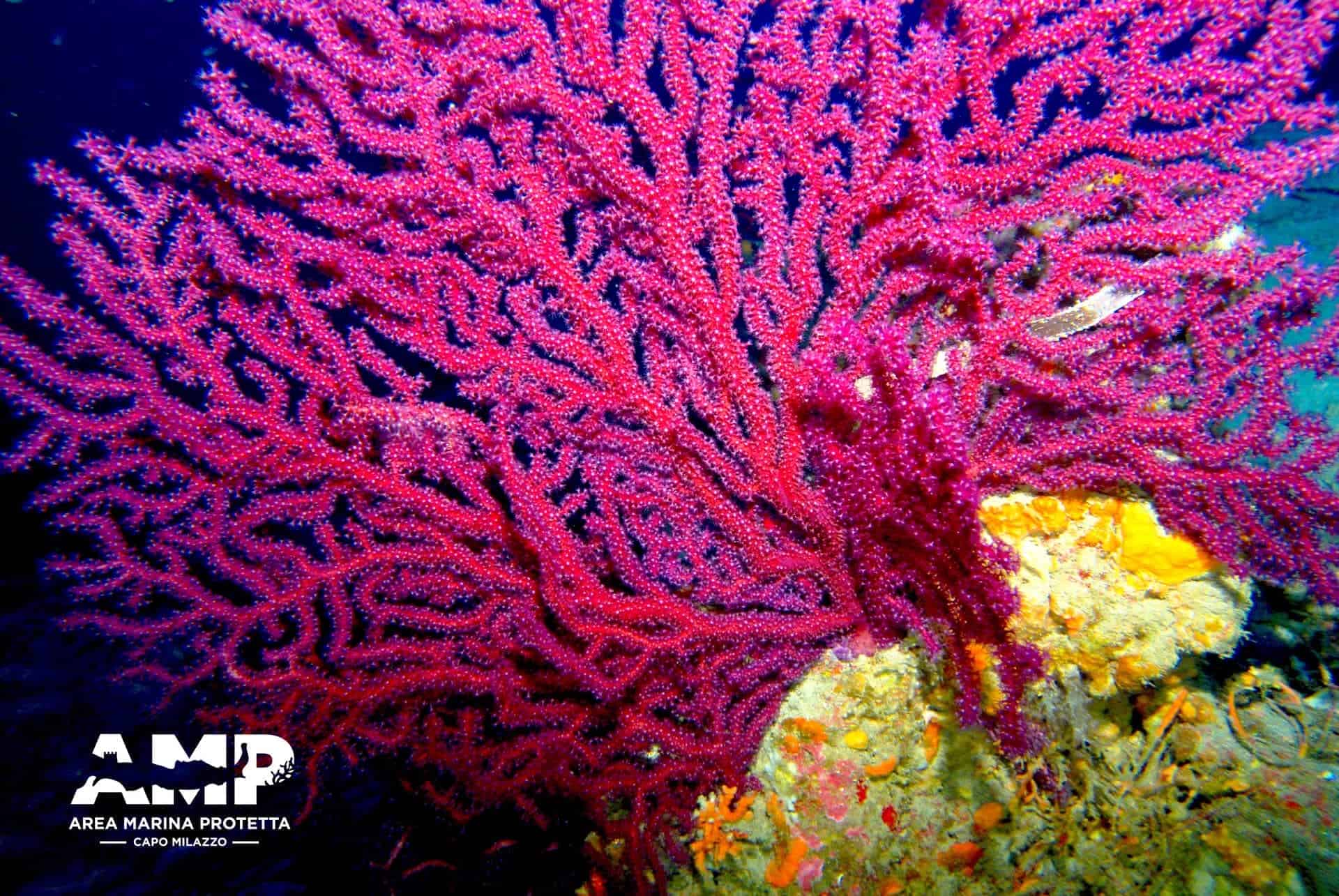
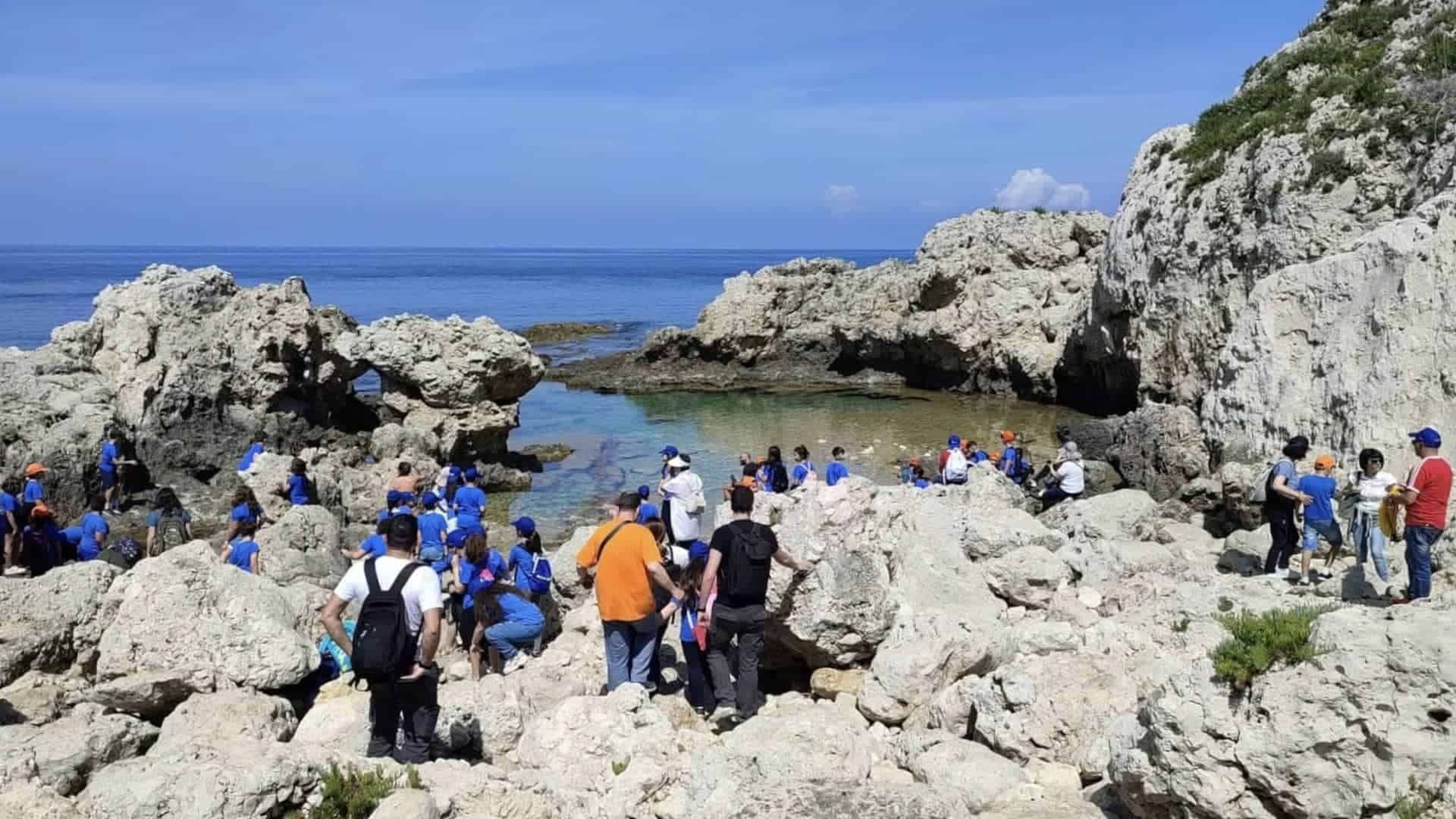
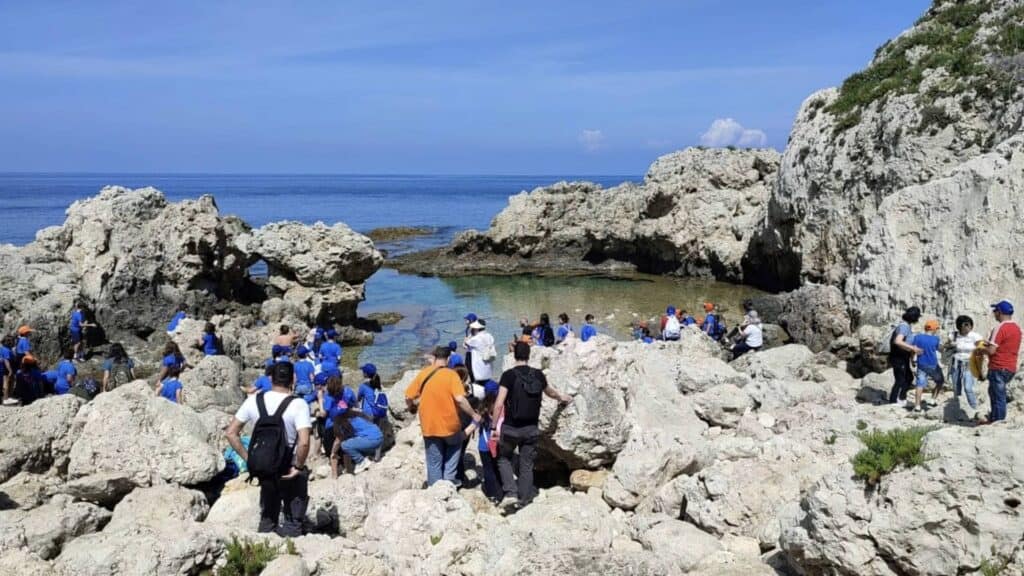
These, along with many others, were the topic discussed in the Marine Protected Area “Capo Milazzo” on 1st June 2023, during the World Reef Day. In that occasion, the researchers of the team Sea Marvel from the University of Catania (Alessandra Raffa and Enrico Giarruso) and POA operators (Marika Testa, Giorgio Leonardi, Claudia Colombo), together with the students of the fourth and fifth grade of the Istituto Comprensivo III in Milazzo, gathered to celebrate the World Reef Day. Several activities were planned during the day, such as walks along the paths of the promontory located in the MPA, up to the northernmost tip hosting the “Pool of Venus”, in order to show the students the rich terrestrial and marine biodiversity present in the MPA “Capo Milazzo”. Among the most typical species inhabiting the Marine Protected Area “Capo Milazzo” we find the Alcyonacea, a coral populating the Mediterranean’s seabed. Each species lives at a particular depth and the first one that we can see while diving is the white Gorgonian (Eunicella singulari), followed by the yellow Gorgonian (Eunicella cavolinii), the red one (Paramuricea clavata), to finally reach a 200 meters’ depth, where it is possible to find specimens of black Coral (Antipathella subpinnata).
The activities aimed at raising awareness among the students are the main pillars of the project Sea Marvel. The project is intended to spread knowledge on the rich biodiversity of the Mediterranean, by informing young students and all the citizens on its fragile balance and the current precarious state.
We thank the MPA “Capo Milazzo” – associate partner of the project Sea Marvel – for the warm welcome, and all the teachers and students of the Istituto Comprensivo III in Milazzo for their active involvement.